3 myths about the future of work (and why they're not true)
by Daniel Susskind · the future of work in an ai-driven world
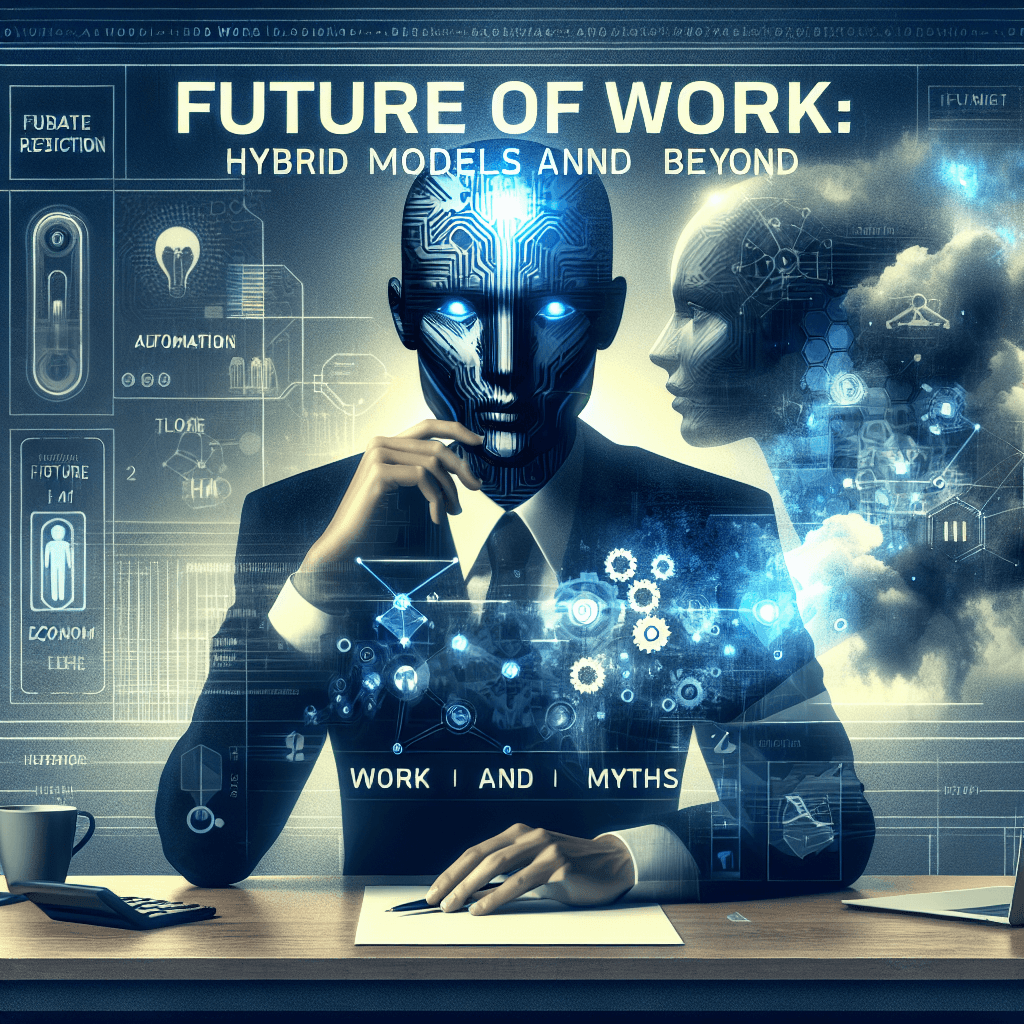
- work
- AI
- economy
- future
3 Myths About the Future of Work (and Why They're Not True)
Introduction
In an AI-driven world, the future of work is a hot topic sparking both excitement and anxiety. As artificial intelligence reshapes industries, misconceptions abound. This essay debunks three common myths about the future of work, drawing on trends and evidence to show why they're not true. By understanding these, we can approach AI's role in our professional lives with optimism and clarity.
Myth 1: AI Will Eliminate All Jobs
One pervasive myth is that AI will render human workers obsolete, leading to widespread unemployment. This fear echoes historical concerns during the Industrial Revolution, when machines were thought to replace laborers entirely.
However, this isn't true. AI doesn't eliminate jobs; it transforms them. History shows that technology creates more opportunities than it destroys.
- Job Creation: AI has already spawned new roles like data scientists, AI ethicists, and prompt engineers.
- Augmentation Over Replacement: Tools like AI assistants enhance productivity, allowing humans to focus on high-value tasks.
- Economic Evidence: Studies from organizations like the World Economic Forum predict that by 2025, AI will create 97 million new jobs while displacing 85 million.
In reality, AI acts as a collaborator, not a competitor, fostering innovation and growth in the workforce.
Myth 2: Humans Will Be Irrelevant in an AI-Dominated Workplace
Another myth suggests that AI's superior speed and accuracy will make human skills irrelevant, turning workplaces into fully automated environments where people are sidelined.
This overlooks the unique strengths of human intelligence. AI excels at repetitive, data-heavy tasks but struggles with nuances that require empathy, creativity, and ethical judgment.
- Human Strengths: Skills like emotional intelligence, critical thinking, and adaptability remain irreplaceable. For instance, in healthcare, AI can analyze scans, but doctors provide compassionate care.
- Hybrid Models: Successful companies are adopting human-AI teams, where AI handles analytics and humans drive strategy and innovation.
- Lifelong Learning: The future emphasizes reskilling; programs like online courses and corporate training are preparing workers to thrive alongside AI.
Far from irrelevance, humans will lead in an AI-driven world, leveraging technology to amplify their capabilities.
Myth 3: The Future of Work Will Be Dystopian and Inhumane
Many envision a grim future where AI leads to overwork, surveillance, and loss of work-life balance, painting a picture of a soulless, efficiency-obsessed dystopia.
This myth ignores the potential for positive change. AI can humanize work by automating mundane tasks, freeing time for meaningful pursuits.
- Improved Balance: AI tools like automated scheduling and virtual assistants reduce administrative burdens, enabling flexible hours and remote work.
- Ethical AI Development: Initiatives focus on fair AI, addressing biases and ensuring worker privacy to prevent surveillance states.
- Societal Benefits: AI-driven efficiencies could lead to shorter workweeks or universal basic income experiments, as seen in pilots in Finland and Canada.
Ultimately, the future of work can be empowering if we prioritize ethical implementation and inclusive policies.
Conclusion
Debunking these myths reveals a future of work that's collaborative, innovative, and human-centered. AI isn't a threat but a tool to enhance our professional lives. By embracing education, ethical guidelines, and adaptability, we can navigate this AI-driven era successfully. The key is to focus on possibilities rather than fears, ensuring technology serves humanity's best interests.